
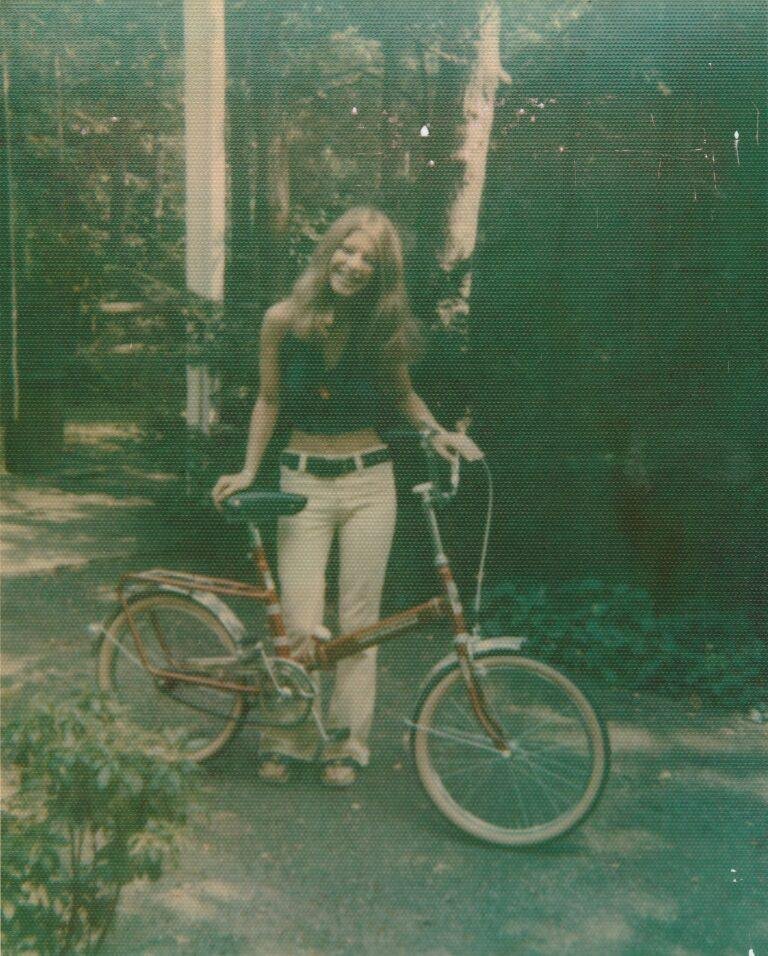
Douglas County, Colorado — 1987
For nearly four decades, the murder of 30-year-old Rhonda Marie Fisher remained one of Douglas County, Colorado’s unanswered cases.
There was a crime scene. There was evidence. There were people investigators questioned and leads they followed. But despite years of work, the person responsible for Rhonda’s death was never identified.
Then, almost 38 years later, a piece of evidence that had been collected in 1987 gave investigators an answer.
And the name it revealed belonged to a man already known for a long history of violence.
A Body Found Along Perry Park Road
On April 1, 1987, a passing motorist made a disturbing discovery along the 3500 block of South Perry Park Road, south of Sedalia in rural Douglas County.
Down an embankment was the body of Rhonda Marie Fisher.
She had been sexually assaulted and strangled.
Investigators began reconstructing Rhonda’s final known movements. They determined that she had been seen alive the previous night in Denver, walking north along Monaco toward Leetsdale.
In the weeks before her death, Rhonda had been staying with different acquaintances. One of those people attracted investigators’ attention early in the case, but was eventually cleared.
Detectives continued looking for answers, examining numerous possibilities and investigating violent offenders who had operated throughout the Denver metropolitan area during the 1970s, 1980s, and 1990s.
But none of those efforts produced a definitive answer.
Decades Without an Answer
The investigation did not simply disappear.
Over the years, detectives periodically returned to the case, hoping that advances in forensic science might reveal something investigators in 1987 could not have detected.
In 2017, evidence was submitted for additional DNA testing.
But the testing did not produce a complete DNA profile that could identify Rhonda’s killer.
Once again, the case went quiet.
For Rhonda’s family and friends, however, the passage of time did not erase what had happened. The person responsible for her death was still unidentified.
The Case Is Reopened
In early 2025, investigators with the Douglas County Sheriff’s Office Cold Case Unit took another look at Rhonda’s murder.
This time, investigators approached the evidence with technologies and forensic methods that had continued to evolve since the original investigation.
The review involved detectives, a forensic scientist from the Unified Forensic Lab, and personnel from the Property & Evidence facility.
Evidence collected nearly four decades earlier was examined again.
And investigators decided to submit additional items for DNA analysis.
Among those items were paper bags that had been placed over Rhonda’s hands at the time of the investigation. The bags had been used to protect potential trace evidence.
What had appeared to be ordinary evidence from a 1987 crime scene would eventually become the key to identifying the person responsible.
A DNA Match Changes Everything
In late October, investigators received a case-to-case match through CODIS, the Combined DNA Index System.
The DNA recovered from the paper bags matched biological evidence connected to three murders committed in Denver in 1979.
The connection led investigators to Vincent Darrell Groves.
Groves was already a known violent offender with a documented history involving vulnerable women in the Denver area.
The DNA evidence finally connected him to Rhonda Fisher’s murder.
There was just one problem.
Vincent Groves had been dead for decades.
Who Was Vincent Darrell Groves?
Groves had been involved in violent criminal activity in Colorado for years.
Investigators have connected him through DNA and other investigative evidence to multiple killings and other violent offenses in the Denver metropolitan area.
His criminal history included convictions for murder. According to investigators, he was released after serving fewer than five years for one of those convictions, before becoming involved in additional violent crimes.
Authorities ultimately connected Groves to at least a dozen homicides, as well as an attempted murder and a sexual assault.
Investigators have also said the actual number of his victims could have been higher.
Groves died in 1996 while in the custody of the Colorado Department of Corrections, following convictions related to the murders of Diann Mancera in Douglas County and another woman in Adams County.
His death meant he could never stand trial for Rhonda Fisher’s murder.
But the DNA evidence could still provide something her family had been waiting decades to receive:
an answer.
The Evidence That Waited
Perhaps the most remarkable part of Rhonda’s case is how long the crucial evidence survived.
The paper bags had been collected in 1987 and preserved as part of the investigation.
Nearly four decades later, forensic testing was able to recover a usable DNA profile from them.
That profile produced a match to evidence associated with Groves.
It was not a new witness who solved Rhonda’s case.
It was not a confession.
It was evidence that had been sitting in police custody for decades, waiting for science to catch up with it.
Justice, Even After Death
Rhonda’s case is now considered resolved by the Douglas County Sheriff’s Office.
But the resolution comes without a courtroom.
Groves cannot be prosecuted or held accountable for Rhonda’s murder because he died in 1996.
For the people who loved Rhonda, however, knowing who was responsible may answer a question that had remained open for most of their lives.
Rhonda was not simply a name in an old case file.
She was a mother, daughter, sister, and friend.
Her life ended violently in 1987, but the investigation into her death continued long after the original detectives had left the case.
A Cold Case Finally Has an Answer
Rhonda Fisher’s murder is one of several previously unsolved cases that the Douglas County Sheriff’s Office says it has resolved through renewed investigations and advances in forensic science.
Her case demonstrates something investigators have learned repeatedly over the years:
Cold cases are not necessarily forgotten cases.
Evidence can survive.
Technology can change.
And an investigation that once seemed to have reached a dead end can sometimes begin moving again decades later.
For Rhonda Marie Fisher, the breakthrough came from something investigators had preserved since 1987.
A pair of paper bags.
Nearly 38 years after her murder, they helped reveal the identity of the man responsible.
And after decades of uncertainty, Rhonda’s family finally has an answer to one of the most painful questions surrounding her death.
This story is based on publicly available information and reported facts. It has been independently written and presented for informational purposes. Images, if any, belong to their respective owners.


Leave a Reply