
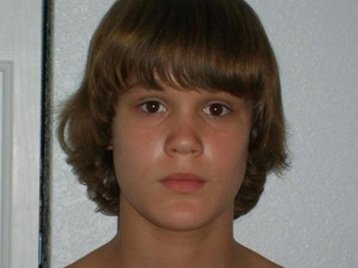
Summerfield, Florida — April 17, 2011
Fifteen-year-old Seath Tyler Jackson thought he was being given a chance to fix a broken relationship.
Instead, the invitation led him into an ambush.
On April 17, 2011, Seath was lured to a house in Summerfield, Florida, where five young people were waiting for him. What followed was a violent attack that ended with Seath being shot and killed.
The effort to conceal what happened afterward was just as disturbing. His body was burned, his remains were collected, and the ashes were eventually dumped into a water-filled rock quarry.
Within days, investigators would begin piecing together what happened—and uncover a plan that had been building in the weeks before Seath’s death.
A TEENAGE RELATIONSHIP TURNS BITTER
Seath had been dating 15-year-old Amber Wright since December 2010.
By March 2011, however, the relationship had ended badly. Amber soon became involved with 18-year-old Michael Shane Bargo Jr., who developed a hostile attitude toward Seath.
According to court records summarized in the source material, Bargo believed Seath had mistreated Amber. At the same time, Seath’s social-media posts suggested that he was still emotionally affected by the breakup.
The conflict between the two boys continued to escalate.
There were arguments and threats, including an alleged threat from Bargo that he had a bullet with Seath’s name on it.
Bargo eventually began planning an attack.
Others became involved.
Amber Wright, her 16-year-old brother Kyle Hooper, and friends Charlie Ely and Justin Soto joined the plot. Hooper had once been close to Seath, but their friendship had deteriorated following the breakup between Seath and Amber.
The group would soon turn their anger into a plan to bring Seath to a place where he would have little chance of escaping.
THE CALL THAT BROUGHT SEATH TO THE HOUSE
On April 17, Amber contacted Seath.
She told him she wanted to reconcile and suggested that they could repair their relationship.
Seath believed her.
He went to a house in Summerfield belonging to Charlie Ely.
He did not know that the meeting had been arranged as a trap.
Once Seath arrived, the group attacked him.
He was beaten and struck in the head and was also shot during the assault. Despite his injuries, he reportedly tried to get away.
Justin Soto used an axe handle to strike him, and the attackers forced Seath back inside.
He was eventually placed in a bathtub.
Michael Bargo then shot Seath, killing him.
The teenagers wrapped Seath’s body in a sleeping bag and placed it in a backyard fire pit, where it remained for several hours.
THE ATTEMPT TO HIDE THE CRIME
The following morning, James Young Havens III arrived at the house.
Havens, who was 37 at the time, was described as the stepfather of Amber Wright and Kyle Hooper. According to the source material, he helped the group dispose of what remained of Seath’s body.
The ashes were placed inside five-gallon paint cans.
The cans were then taken to a rock quarry in the Ocala area and thrown into the water.
Inside the house, the group attempted to erase evidence of the attack. Blood was cleaned away with bleach.
But the effort to destroy the evidence did not erase what had happened.
SEATH IS REPORTED MISSING
On April 18, Seath’s mother reported her son missing.
Investigators quickly began connecting the people around him to his disappearance.
Two days later, on April 20, all six suspects were arrested.
Five of them were charged in connection with the murder, while James Havens faced an accessory charge.
The investigation had moved rapidly, and the case soon became one of the most closely watched murder prosecutions in Marion County.
THE PEOPLE INVOLVED
The five youths charged in the murder were:
- Michael Shane Bargo Jr., 18 — identified as the shooter and ringleader.
- Amber Elizabeth Wright, 15 — Seath’s former girlfriend, who helped lure him to the house.
- Kyle Lonnie-Duan Hooper, 16 — Amber’s brother and a former friend of Seath.
- Justin Edward Soto, 20 — involved in the attack.
- Charlie Kay Ely, 18 — the homeowner where Seath was lured.
James Young Havens III, 37, was charged separately as an accessory.
THE FIRST CONVICTION
Charlie Ely became the first of the five youths to be convicted.
On September 23, 2011, a Marion County jury found her guilty of first-degree murder.
The following month, she was sentenced to life in prison without parole.
But Ely’s case would eventually change.
Years later, she successfully challenged her conviction, arguing that she had received ineffective legal representation. In 2020, a federal judge granted her appeal and ordered a new trial.
Ely ultimately pleaded guilty to the lesser charge of second-degree murder.
She was sentenced to ten years, but because of the time she had already served and her conduct while incarcerated, she was released immediately following the June 2020 sentencing.
THE OTHER CONVICTIONS
Justin Soto pleaded guilty to first-degree murder in May 2012.
His plea avoided the possibility of a death sentence, and he received life imprisonment without parole.
Amber Wright and Kyle Hooper were tried separately before two juries in June 2012.
Both were found guilty of first-degree murder.
Because they were under 18 when Seath was killed, the law surrounding their sentences became an important part of their appeals.
Their original life-without-parole sentences were later overturned.
Wright was retried in 2016 and again found guilty. She was subsequently sentenced to life imprisonment with the possibility of parole after 25 years.
Hooper was resentenced later that year under the rules governing juvenile offenders and received the possibility of parole after 25 years.
James Havens, who had initially been found incompetent to stand trial, eventually pleaded guilty in 2018 to his role as an accessory.
MICHAEL BARGO AND THE DEATH PENALTY
Michael Bargo was the final one of the five youths to face trial.
On August 20, 2013, a jury found him guilty of first-degree murder.
Because prosecutors considered him the ringleader and the person who fired the fatal shots, they sought the death penalty.
The jury recommended death by a 10–2 vote.
On December 13, 2013, a judge formally sentenced Bargo to death.
But the case did not end there.
YEARS OF APPEALS
Bargo challenged his death sentence, and the legal fight continued for years.
In 2017, the Florida Supreme Court overturned his death sentence and ordered a new sentencing proceeding after changes to Florida’s death-penalty law affected the requirements for jury recommendations.
A new sentencing trial began in 2019.
This time, the jury unanimously recommended the death penalty.
On September 12, 2019, the judge reinstated Bargo’s death sentence.
His subsequent appeal was denied by the Florida Supreme Court in 2021.
According to the source material, as of 2026, Bargo remains on death row at Union Correctional Institution awaiting execution.
A LIFE THAT ENDED AT FIFTEEN
Seath Jackson was only fifteen years old.
He went to a house believing he was meeting someone he once cared about and perhaps repairing a relationship that had ended badly.
Instead, he walked into a carefully arranged ambush.
The investigation eventually exposed the people involved, and the courts delivered convictions and sentences that continued to evolve through years of appeals and resentencing.
But none of those proceedings could change the central fact of the case:
Seath was a teenager whose life ended violently on April 17, 2011.
His remains were never given the ordinary dignity of a burial. They were burned and discarded in a quarry in an attempt to make the crime disappear.
It didn’t.
The investigation uncovered what happened, the people responsible were identified, and the case became a lasting reminder of how quickly teenage conflicts, threats, and revenge can escalate into irreversible violence.
This story is based on publicly available information and reported facts. It has been independently written and presented for informational purposes. Images, if any, belong to their respective owners.



Leave a Reply