
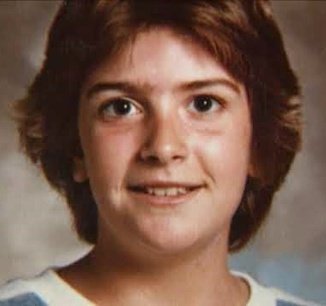
On July 17, 1982, an ordinary afternoon in Marshallville, Ohio, turned into a nightmare when 11-year-old Krista Lea Harrison disappeared while spending time at a local park.
What followed was a heartbreaking search, a disturbing discovery, and an investigation that eventually led authorities to a convicted killer. Yet the case continued to raise questions about whether Krista was the only young victim connected to the man investigators believed was responsible.
The Day Krista Disappeared
Krista had been at a park near her home with a friend, collecting aluminum cans. The park was only about 100 yards from where she lived.
According to her friend, a man arrived in a van and approached Krista. The girl described him as being somewhere between 25 and 35 years old, with shoulder-length hair.
The stranger reportedly forced Krista into his vehicle before driving away.
Her friend was able to provide investigators with a description of the van. It was believed to be brown or dark red and had distinctive round windows toward the rear.
A major search began soon afterward. Volunteers and authorities looked throughout the surrounding area, hoping Krista might still be found alive.
At first, some investigators considered the possibility that the kidnapper might eventually demand a ransom.
No ransom call ever came.
A Terrible Discovery
Six days after Krista vanished, investigators made a discovery that ended the search in the worst possible way.
Her remains were found near a shed in a wooded area off Township Road 464 in Holmes County, outside Loudonville. The location was roughly 35 miles from where she had disappeared.
Because of the condition of the remains, identification was difficult. Krista’s father, Gerald Harrison, eventually confirmed that the victim was his daughter.
Investigators determined that Krista had been strangled and sexually assaulted.
A large plastic bag had been placed around her legs. Several items were recovered near the location, including a Budweiser towel, a bloody car-seat box, hair believed to belong to Krista, gloves, a plaid shirt and jeans.
The investigation also suggested that Krista’s body had been exposed to significant heat, possibly because it had remained inside a vehicle during the hot summer weather.
She was later laid to rest at Maple Grove Cemetery in Marshallville.
A Strange Clue: The Orange Fibers
Among the evidence recovered from Krista’s body and the towel was a collection of unusual polyester fibers.
They were described as having a nutmeg or orange-like color.
When investigators examined the fibers under a microscope, they believed they came from some type of carpeting.
That clue became especially important because investigators had encountered similar fibers in another case.
Eight months earlier, 12-year-old Tina Harmon had been raped and murdered in the same county.
At first, authorities had treated the two cases separately. But the similarities began to stand out.
Both girls had been sexually assaulted and strangled, and both bodies were discovered in Holmes County. The unusual fibers provided another possible connection.
Investigators began considering the possibility that the same person could have been responsible.
The Car-Seat Box
Another important piece of evidence was the plastic bag found around Krista’s body.
Investigators traced the type of bag to a factory in Pioneer, Ohio. The bags had been used to package a particular type of black car seat.
Those car seats had reportedly been sold through Sears for only a limited period, primarily through mail-order sales.
The investigation eventually identified 23 people in northern Ohio who had purchased the same type of car seat.
But there was a problem.
None of the identified buyers appeared to own a van matching the description given by Krista’s friend.
For the time being, the investigation remained without a suspect.
A New Crime Leads Investigators to Robert Buell
A year after Krista’s murder, another violent crime in Ohio changed the direction of the investigation.
In 1983, Robert Anthony Buell, then 43 and employed by the state of Ohio, abducted a 28-year-old woman who worked as a gas-station manager in Damascus.
The woman survived a terrifying attack.
According to investigators, Buell assaulted her, restrained her and raped her before leaving for work. She eventually managed to escape and ran to a nearby home, where she contacted police.
Buell was arrested.
For investigators working on Krista’s case, the arrest provided a possible breakthrough.
They began examining whether the evidence from Krista’s murder could be connected to Buell.
Evidence Inside the Van
Police compared the orange-colored fibers recovered from Krista’s body with carpeting found inside Buell’s van.
The van was similar in color to the vehicle described by Krista’s friend.
There was initially a difference in the shape of the rear windows. Investigators later learned that the windows had been replaced, helping explain the discrepancy.
The forensic evidence continued to accumulate.
Investigators believed the carpeting inside Buell’s van was consistent with the fibers recovered from Krista.
Sears records also showed that Buell had purchased the same type of car seat associated with the packaging found at the crime scene.
Other evidence appeared to connect Buell to the location where Krista’s body had been left. Paint found on the jeans recovered near the dump site was reportedly consistent with paint from outside Buell’s residence.
Investigators also found spray paint in his garage that was compared with paint discovered on the car-seat box.
However, not every piece of evidence pointed directly to Buell. A fingerprint recovered from plastic covering Krista’s body did not match his fingerprints.
The Trial and Death Sentence
Buell eventually pleaded no contest to the kidnapping and rape of the adult woman he had attacked.
He continued to deny responsibility for Krista Harrison’s murder.
Despite his denial, prosecutors presented the forensic and circumstantial evidence connecting him to the crime.
In 1984, Buell was convicted and sentenced to death.
He remained on death row for years.
Buell continued to insist that he had not killed Krista. Even near the end of his life, he maintained that the real killer had never been identified.
In 2002, Robert Anthony Buell was executed by lethal injection.
Other Cases Connected to Buell
Krista’s case was not the only investigation in which Buell later became a focus.
Although he was never charged with Tina Harmon’s murder, investigators eventually obtained DNA evidence that changed the picture.
In 2010, DNA recovered from the crime scene in Harmon’s case was compared with Buell’s DNA and was reported to be a match.
That evidence indicated that Buell had been involved in the sexual assault and strongly suggested a connection to Harmon’s death.
Another disturbing case involved 10-year-old Deborah Kaye Smith, who was murdered in 1983.
Her body was discovered more than a month after her death near the Tuscarawas River. Investigators found wax on her body that was reportedly consistent with the type of candles Buell owned.
These cases added to the questions surrounding Buell and the possibility that he had been responsible for more crimes than those for which he was formally convicted.
Questions That Remained
Even after Buell’s conviction and execution, the broader mystery surrounding several Ohio child murders did not completely disappear.
Former journalist James Renner later explored theories suggesting that Buell’s nephew, Ralph Ross Jr., might have had some involvement in the crimes.
Renner also examined possible connections between these cases and the unsolved murders of Barbara Barnes, 13, and Amy Mihaljevic, 10.
Those theories have remained subjects of discussion and investigation, but they should not be treated as established facts without supporting evidence.
Remembering Krista
Krista Harrison was only 11 years old when she was taken from a park close to her home.
What began as an ordinary afternoon spent collecting cans with a friend ended in a tragedy that devastated her family and shocked the community.
The investigation lasted years and relied heavily on forensic clues that were unusual for their time—fibers, paint, vehicle evidence, purchasing records and eventually DNA.
Krista’s story is also a reminder of how difficult older homicide investigations can be. Evidence that once seemed too small to matter can become extremely important when forensic technology advances.
More than four decades later, Krista’s name remains connected to one of Ohio’s most disturbing child-murder investigations.
She was not simply a case file or a forensic clue.
She was an 11-year-old girl who went to a nearby park one summer day—and never made it home.
This story is based on publicly available information and reported facts. It has been independently written and presented for informational purposes. Images, if any, belong to their respective owners.


Leave a Reply