
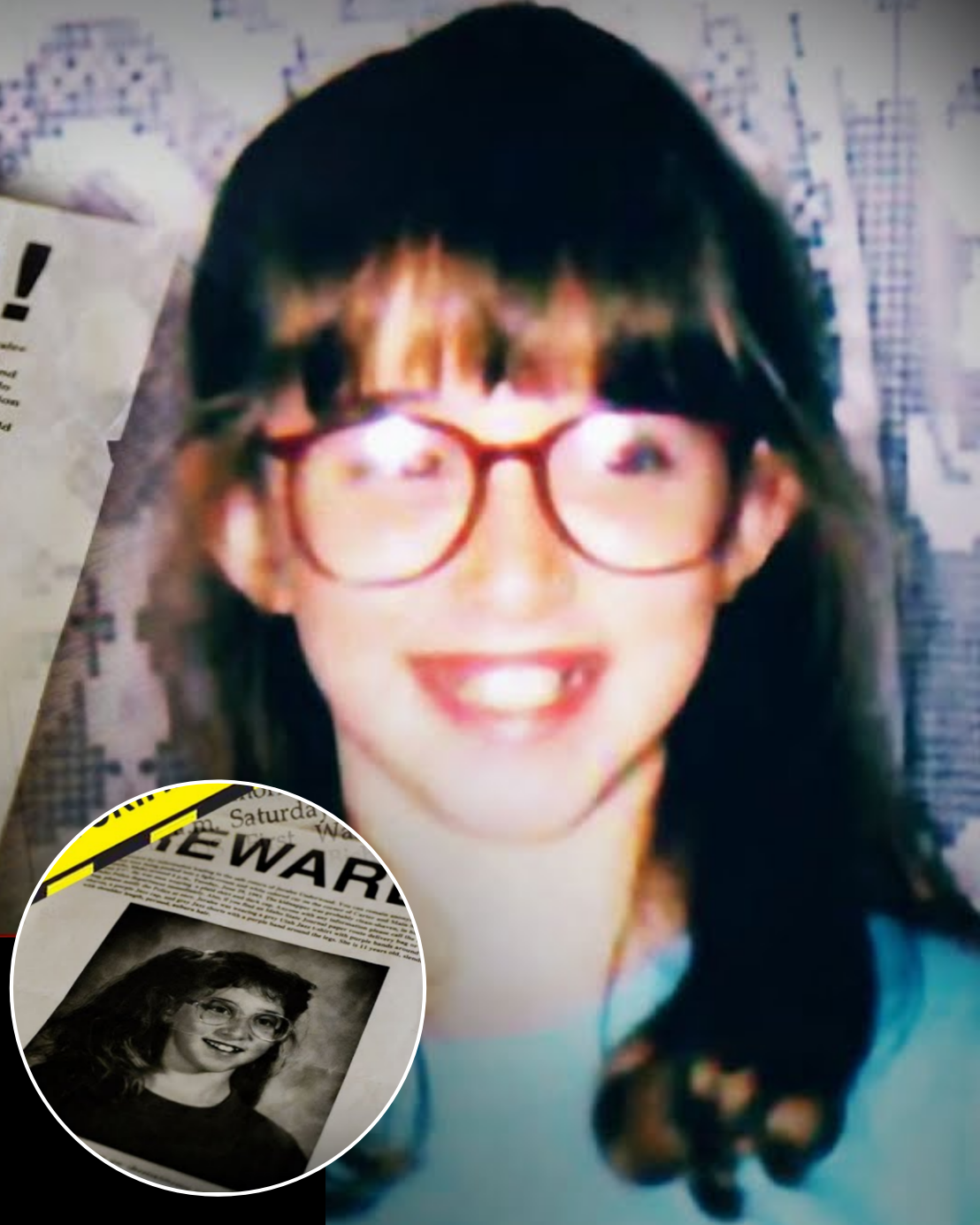
On the evening of June 29, 1992, an 11-year-old girl named Jeralee Underwood disappeared while delivering newspapers in Pocatello, Idaho.
She had left home on what should have been an ordinary summer evening. Instead, her disappearance triggered one of the largest searches the community had ever seen and eventually exposed the horrifying history of the man responsible for her death.
Jeralee would never return home.
A Bright and Happy Childhood
Jeralee Underwood was born on January 9, 1982, five weeks premature and weighing only four pounds, twelve ounces. She spent her first ten days in the hospital before her parents, Jeff and Joyce Underwood, were finally able to bring her home.
She was the second of six children.
Her family remembered her as an energetic, cheerful child who loved dancing, clogging, reading and spending time outdoors. Her father later recalled that photographs of Jeralee almost always showed the same thing — a big smile.
By the summer of 1992, Jeralee was 11 years old and enjoying her school break.
She and her older brother, Jamen, had started delivering newspapers in their neighborhood. The route was close enough to home that the children were familiar with the streets and many of the people who lived there.
Their parents had taught them the usual lessons about strangers and personal safety.
Nobody expected that those lessons would soon become desperately important.
The Disappearance
June 29 began with rain, but by approximately 5:30 that evening, the weather had cleared.
Jeralee had an orthodontist appointment earlier that day. After returning home, she decided she wanted to continue working on the newspaper route with her bicycle.
Her father went outside to repair a flat tire on the bike. But by the time he returned to tell her it was ready, Jeralee had already left.
She had apparently gone out on foot.
A short time later, a neighbor approached the Underwoods with alarming news. She had seen Jeralee get into a vehicle.
At first, the family wondered whether she had simply accepted a ride from someone she knew.
Then they learned what had actually happened.
Jeralee had been forced into the vehicle.
Police were immediately called, and the case was treated as an abduction.
A Community Searches
Lieutenant Kirk Nelson of the Pocatello Police Department’s detective division was among the officers involved in the investigation.
One elderly woman who lived nearby had witnessed the incident from her home. She had reportedly seen a man force Jeralee into a vehicle before driving away.
She gave investigators a description of the man: a white male approximately five feet seven or eight inches tall, wearing a plaid shirt and a cap.
Police quickly broadcast the description throughout the area.
But there was another problem.
Pocatello had only around 80 trained police personnel available at the time. For a search involving a missing child, that was nowhere near enough.
The community stepped in.
Volunteers joined police officers and began searching neighborhoods, roads and surrounding areas. People went door to door along Jeralee’s newspaper route, hoping someone had noticed something that could help investigators.
Another witness provided a description of the vehicle: an older, medium-sized General Motors sedan with a darker roof and a cream or light-colored body.
Investigators searched the outskirts of Pocatello, believing that an offender who had taken a child from a residential neighborhood might have chosen a nearby secluded location.
Nothing immediately turned up.
For Jeralee’s parents, every passing hour brought more fear.
Looking at the Family
As happens in many missing-child investigations, detectives initially had to examine the possibility that someone close to Jeralee might have been involved.
For her parents, that part of the investigation was especially painful.
Joyce later described some of the questions as difficult to comprehend. Investigators considered possibilities such as whether Jeralee had run away or had a secret relationship.
But the family knew their daughter.
She was only 11 years old. There had been no pattern of behavioral problems or anything suggesting that she intended to disappear.
She had simply gone out to complete her newspaper route.
The Underwoods were also looking forward to a family picnic that weekend.
Instead, they were desperately searching for their daughter.
Investigators Search for a Pattern
The investigation was led by Sergeant Scott Shaw, who had specialized training in violent-crime investigations.
Shaw believed strongly in using media coverage to generate information from the public. The department continued asking residents to come forward with anything they had seen around the time Jeralee disappeared.
Investigators also organized a large community search from the family’s church.
Shaw paid close attention to the people participating in the search. He considered the possibility that the person responsible could potentially be among the volunteers, watching the community react to the crime.
An FBI profile suggested the offender may have been organized and deliberate.
Shaw wasn’t convinced.
The abduction had happened in broad daylight on a residential street, with witnesses nearby. To him, that suggested a person who might have acted more impulsively.
There was another unusual detail.
Witnesses had apparently seen Jeralee around the man before she was forced into the vehicle, and she did not initially appear frightened.
That led investigators to consider whether the offender had somehow convinced her that he was safe.
A Possible Connection
Investigators eventually began looking into an earlier crime.
In November 1991, a teenage girl had been abducted from a restaurant parking lot on the other side of Pocatello. She had been taken to an isolated area, assaulted and later released.
The victim had provided enough information for police to create a composite sketch.
When Shaw compared that description with the information from Jeralee’s case, he noticed similarities.
Investigators began considering whether the two crimes might be connected.
Then, three days after Jeralee disappeared, a crucial tip arrived.
A woman contacted police and told them about a relative she believed could be connected to the case.
His name was James “Jimmy” Wood.
According to the tipster, Wood resembled both the description provided by witnesses and the composite sketch from the earlier assault. His vehicle also appeared similar to the one witnesses had described.
There was more.
Wood had reportedly spent time in the same neighborhood where Jeralee disappeared.
James Wood Becomes the Suspect
Wood was staying in the basement of a relative’s home.
That relative told investigators that Wood had gone camping on rural property north of Pocatello after Jeralee disappeared.
Police searched the property and found a vehicle that appeared very similar to the description given by witnesses.
The relative who had been housing Wood later provided additional information.
He told police that Wood had not returned home on the night Jeralee disappeared. He had also shaved his mustache and stopped wearing the clothes he had been wearing earlier.
The relative also knew Wood possessed a handgun.
The information fit several pieces of the investigators’ developing theory.
Wood became the primary suspect.
Then investigators discovered something even more significant.
During interviews with people along Jeralee’s newspaper route, police learned that Wood had been inside a house on the route around the time Jeralee arrived to collect payment.
He reportedly left shortly afterward, saying he was going to the store to buy beer.
He did not return.
The Confession
On July 6, 1992, police went to the residence with a warrant charging Wood with first-degree kidnapping.
Wood resisted when officers attempted to handcuff him, and he was eventually restrained.
At the police station, Sergeant Shaw took Wood into his office.
Initially, Wood claimed that he had driven Jeralee toward the Utah border and released her.
Shaw continued questioning him.
Eventually, Wood changed his story.
He admitted that he had taken Jeralee and driven her north toward Idaho Falls. He described attempting to sexually assault her and later admitted killing her.
He then told investigators that he had disposed of her remains in the Snake River.
For investigators, the confession confirmed what they had desperately feared.
Jeralee was not coming home.
Finding Jeralee
Detectives, working alongside the Idaho Falls Police Department and a sheriff’s dive team, followed Wood to an area along the Snake River.
Investigators found indications in the area that were consistent with Wood’s account.
Some of Jeralee’s remains were recovered nearly a week later downstream, near a power plant.
Her identity was ultimately confirmed through dental records.
For Joyce Underwood, the confirmation brought an unbearable reality. She would never get the chance to see her daughter again.
Yet the family had an answer to the question that had tormented them since June 29.
Jeralee was gone.
A Much Darker History
As detectives continued investigating Wood, they discovered that his history of violence went back decades.
Wood eventually admitted involvement in numerous serious crimes, including murder, kidnapping, rape, robbery and violent assaults.
Some of the attacks dated back to the late 1960s.
Two women survived an earlier attack in which Wood had assaulted them and left them badly injured. In another incident during the 1970s, he abducted a woman from a gas station, sexually assaulted her and shot her. She survived as well.
Investigators also learned about a crime involving Wood’s teenage stepdaughter shortly before Jeralee’s murder.
The pattern painted a disturbing picture of a man who had repeatedly committed violent acts against women and girls.
Wood reportedly told an interviewer that if he were ever released from prison, he would kill again.
Justice for Jeralee
Jeralee’s funeral drew an enormous crowd.
Her disappearance had affected the entire community, and the discovery of her body transformed the town’s fear into grief.
The detectives who had spent weeks searching for her attended the funeral as well.
Wood eventually entered a plea agreement. He pleaded guilty to charges connected to the kidnapping, rape and murder of Jeralee Underwood, while other charges stemming from his broader criminal history were dismissed without prejudice.
He was sentenced to death.
Jeff Underwood later said he believed the punishment was appropriate for what had happened to his daughter.
But Wood would never face execution.
In 2004, while still on Idaho’s death row, James Wood died of natural causes following a heart attack.
Remembering Jeralee
More than three decades after Jeralee’s death, her family continued to carry her memory.
The place where she was taken remained part of the landscape of their lives — a location they would occasionally pass while traveling through town.
Her memory was also preserved at her cemetery, outside her church and through a tree and plaque dedicated to her.
For Jeff and Joyce, Jeralee was never simply the victim of a notorious crime.
She was their daughter.
She was the little girl who loved to dance, read, spend time outdoors and smile for photographs.
She was only 11 when she left home that evening to finish a newspaper route.
She never made it back.
And although the case eventually brought answers to her family, nothing could undo the loss of a child whose life had barely begun.
This story is based on publicly available information and reported facts. It has been independently written and presented for informational purposes. Images, if any, belong to their respective owners.

Leave a Reply